Your routine hasn’t changed. Same cleanser. Same moisturiser. Nothing new, nothing harsher. And yet suddenly, your skin reacts as if you’ve done something to personally offend it.
Products that were your holy grail now sting. Formulas you’ve used for months start burning or leaving behind a tightness that wasn’t there before. Even water (yes, that seemingly inert fluid) can feel uncomfortable.
It’s confusing. Your instinct tells you something in the product changed, or that your skin has mysteriously “become sensitive.” Maybe your skin type shifted overnight (because apparently that’s a thing we’re supposed to believe).
But the reality is that skin doesn’t behave randomly. When reactions appear without an obvious cause, the explanation usually isn’t in the product. It’s in the barrier the product is meeting.
Your skin didn’t suddenly become sensitive. Your barrier became unstable. And there’s a big difference.
What Actually Changed
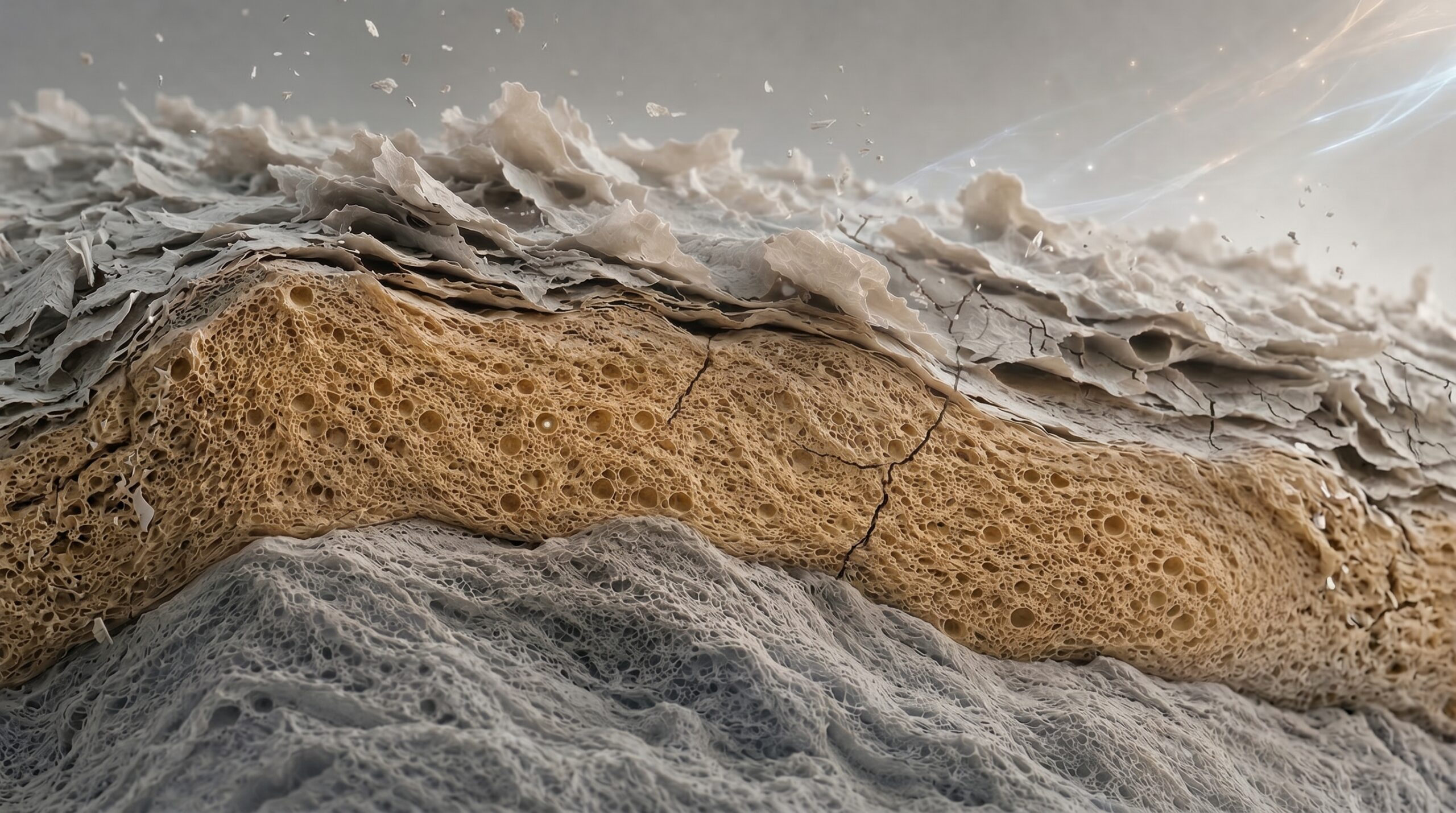
Barrier function doesn’t collapse overnight. What we call barrier damage is often a gradual shift in resilience, driven by cumulative stress: over-cleansing, exfoliation, inflammation, environmental dryness, disrupted pH. The list goes on. None of these need to be extreme. Small pressures, applied consistently, are enough to tip the balance.
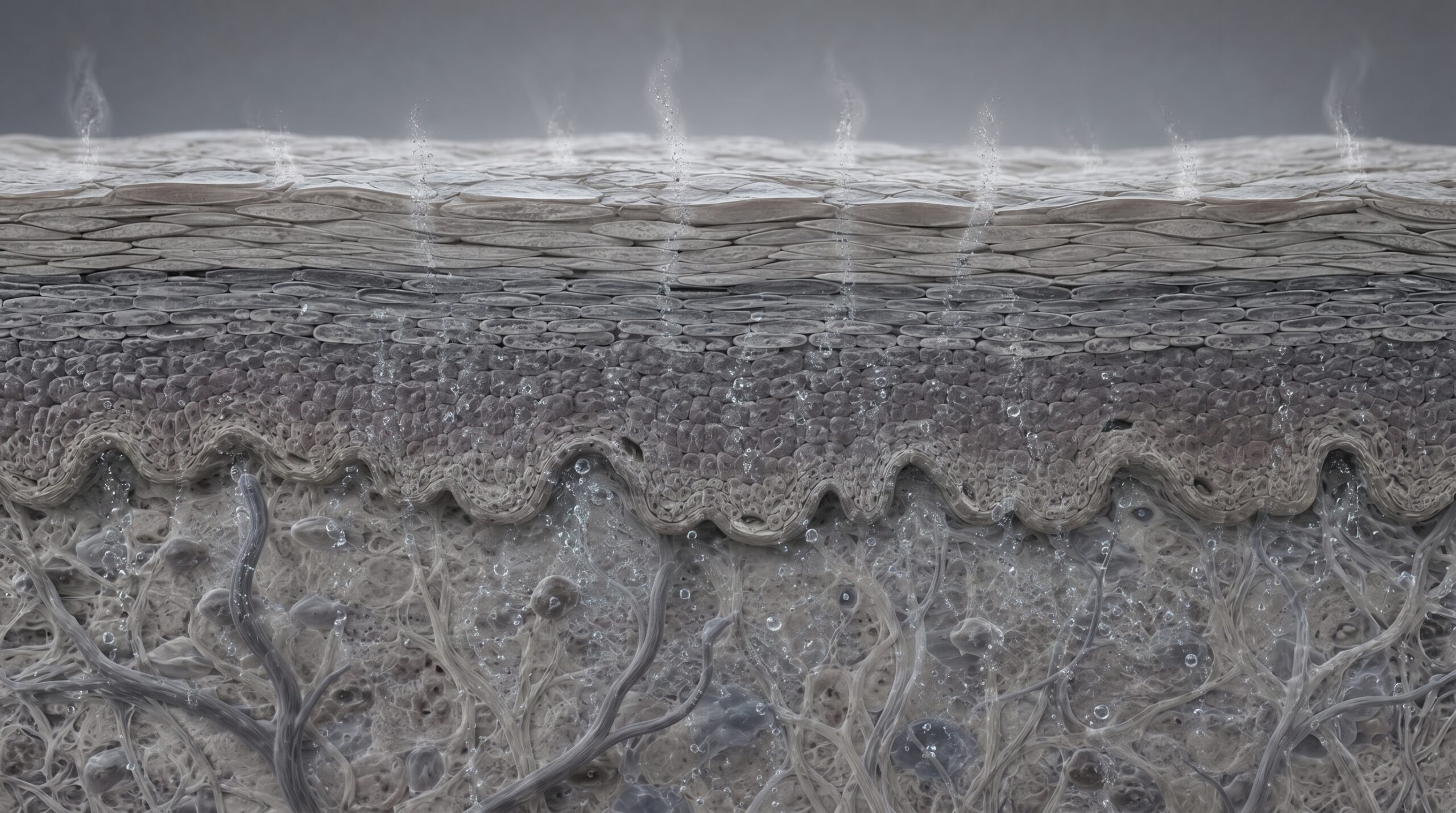
The early changes are invisible. Lipids may still be present, but organised less efficiently. Corneocytes remain intact, but tolerate strain more poorly. From the outside, your skin can look normal (perhaps even well-hydrated) but its ability to regulate what moves across the surface has shifted.
Water escapes more easily. External substances encounter less resistance. Then it gets uncomfortable: sensory nerve endings, usually insulated by lipid order and cellular integrity, now sit closer to exposure. Stimuli that once passed unnoticed now trigger discomfort. A mild acid tingles sharply or a cleanser burns. Even plain water can sting.
What feels like sudden sensitivity is actually a change in tolerance, driven by structural instability. Your skin hasn’t turned against you. The infrastructure protecting it has temporarily lost resilience.
Why Trying More Products Makes Things Worse
When skin becomes reactive, the natural response is to intervene. Products are swapped. New serums are introduced. “Barrier repair” routines replace what you were doing before. You’ll find yourself fixated on ceramides and soothing serums rather than acids and retinol. (I’ve done this.)
Each change is made with good intentions. But this period of experimentation often makes things worse, and the reason is rarely the individual product. It’s the cumulative effect of repeated change on a system that’s lost tolerance.
Every formulation alters your skin’s immediate environment. Cleansers modify hydration and surface chemistry. Actives can influence pH and enzyme activity. Emollients affect lipid behaviour. In stable skin, these fluctuations are absorbed easily. In compromised skin, they become stressors.
Repeated change prevents stabilisation. Your barrier’s in a constant state of responding and recalibrating but never fully settling. At this point, your skin doesn’t want novelty. It needs consistency.
Mentally, the effort is real. The intention is correct, though the biological requirement is different. But ‘do less and wait’ doesn’t make for exciting marketing or glamorous before-and-after photos, so the louder message is usually to add another product or step.
Why You Didn’t Notice Until It Was Too Late
The reason barrier damage often catches people off guard is that the early changes are invisible and the symptoms are delayed. The lipid disorganisation, the pH drift, and the enzyme dysregulation; none of these produce immediate visible signals. Skin can look entirely normal while its tolerance is narrowing. You just can’t see it. By the time the stinging starts and the products stop working, the process has usually been running for weeks. At this point, your skin’s threshold has finally been crossed.
This also explains why it is so difficult to identify the cause. The input that finally triggered a reaction is rarely the input that caused the problem. It’s the one that pushed a system that was already near its limit over the edge. The cleanser you blame was probably fine six months ago. It’s fine now. What changed is the margin the barrier had to absorb it.
What This Means for You
When skin begins reacting to products that once caused no problems, it can feel as though something fundamental has changed. In most cases, the explanation is simpler. Your barrier has shifted into a state of reduced resilience. Permeability has increased. Sensory thresholds have lowered.
The products aren’t suddenly harsher. Your skin isn’t failing. The structure responsible for regulating these interactions is temporarily unstable. The goal isn’t endless replacement or aggressive correction. It’s creating conditions that allow your barrier to stabilise. As structural integrity returns, tolerance usually follows.
If your instinct now is to ask what you should actually do, that’s the right question and it gets its own article. Coming next: what happens to your barrier when you stop adding pressure, and why that window is where recovery begins.
If your skin is acting up, take a deep breath. You aren’t “broken.” Your protective system is probably just under a bit of strain. That system, when supported rather than challenged, is remarkably capable of recovering.
This is the kind of thinking explored in The Damaged Skin Barrier. If you want a clearer framework for understanding what your skin is responding to, without the product-chasing and guesswork, join the launch list to be notified when it’s available.