Skin barrier biology
The skincare industry names symptoms.
You're here to read the system.
Mechanism-first writing on skin barrier biology, damage, and repair. Grounded in primary literature, written by a biochemist, built to explain the regulatory logic that product-led advice consistently avoids.
MBiochem
Cardiff University
The approach
Three Principles hold the platform together
/ 01
Mechanism, not marketing
Skin behaviour explained through biology, regulation, and pressure. Not product folklore, trend-driven routines, or the vague language that benefits nobody except the people selling the next step.
/ 02
Framework, not routines
The goal isn’t another shopping list. It is a clearer way to interpret what your skin is responding to, so the decisions you make rest on something sturdier than guesswork.
/ 03
Understanding that holds up
Better decisions come from clearer models, not louder advice. The barrier is a system. Treating it like one changes what you notice and what you stop reacting to.
From Chapter 7
Petrolatum illustrates this principle with unusual clarity because it does so little. It contains no active ingredients, no ceramides, no signalling molecules, no growth factors. It simply occludes. And in doing so reliably, it produces a rapid, substantial reduction in TEWL.
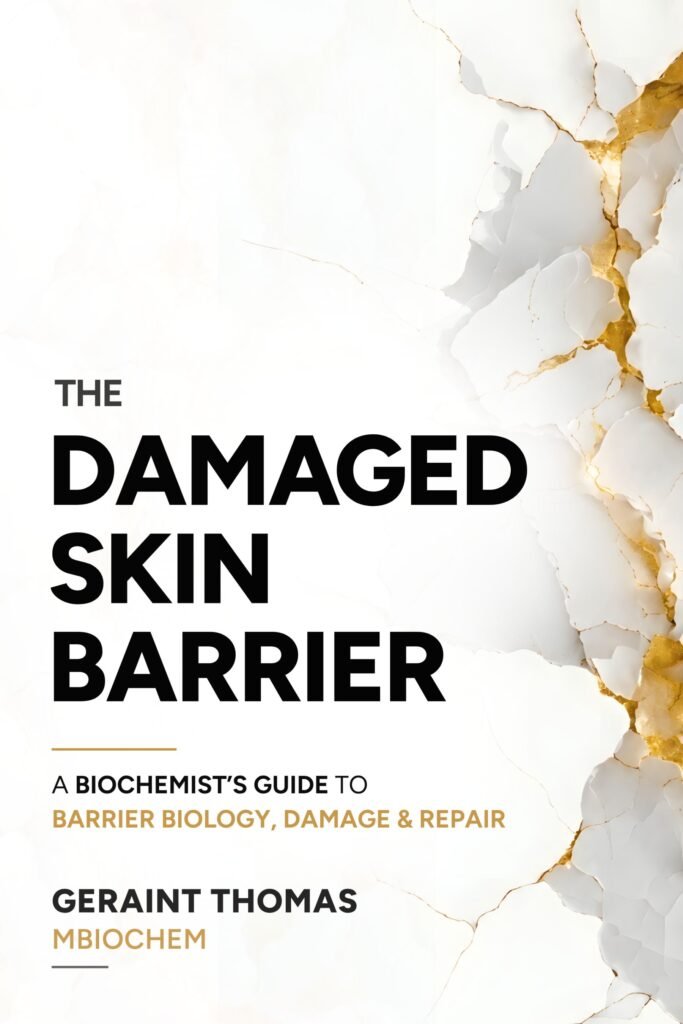
The Damaged Skin Barrier
Current Output
The Damaged Skin Barrier
No routines. No product lists. Just the biology behind why your skin behaves the way it does.
For anyone tired of guessing, overspending, and advice that never actually explains what is going on beneath the surface. Eleven chapters, one framework, and the working assumption that you would rather understand the system than be sold the next step in it.
Preface
I spent the better part of two years making my skincare routine more complicated and my skin considerably worse. Tightness one day, oiliness the next, random stinging, products that worked for months and then didn’t. My routine was absurdly complex. I got quiet satisfaction from a lineup of serums as long as my arm, all arranged alphabetically in my bathroom cabinet, as if organisation alone could fix the confusion.
The thing that broke the pattern was a retinol purge that lasted far longer than any of the standard explanations could account for. Six months in, I stopped adding products and started reading papers. Not to write a book. To find a way out.
The biology exists. The mechanistic explanations exist. They are scattered across primary research that most people will never open, written in a language that doesn’t translate easily, and almost entirely absent from anything aimed at a general reader. Social media is full of hype and overnight transformations. Even thoughtful professionals sometimes lean on long product lists that leave you wondering whether you’re getting honest opinion or subtle endorsement. The clarity I was looking for didn’t exist in one accessible place, so I built it.
This book is not prescriptive. It is mechanistic. It won’t give you the perfect routine, a shopping list, or a timeline for retinol purging. What it will give you is a framework, grounded in how the barrier actually works, so you can make decisions based on what your skin is telling you right now rather than what a product label implies it should be.
Where the biology becomes dense, figures accompany the text. If a passage is heavy going, the figure carries the essential architecture. Read the figure, then return to the prose.
The goal is a quieter relationship with your skin. Instead of the reflex of buying yet another serum in sleek clinical packaging, you get the deeper satisfaction of putting it back on the shelf and thinking: ‘that’s not for me. I know better now.’
I spent too long looking for this clarity. You’ve found it.
When the biology becomes clearer, the symptoms stop feeling random.
Why skin can feel greasy and tight at the same time. Why can products sting after months of seeming fine? Why does your skin sometimes look worse during recovery?
These stop being three problems and start being one system behaving predictably under load.
Contradictions resolve into patterns
What looks like unpredictable behaviour often turns out to be the same regulatory process expressed under different conditions.
Product chasing slows down
When you can read what the skin is responding to, the pull to reach for the next serum stops being the default response.
Skin is treated as a system
Not a list of symptoms to suppress, or a label to match to a product, but a set of processes with their own timing and logic.
From the archive.
“Symptoms matter, but on their own they explain very little. I became more interested in what the skin was trying to compensate for than in the labels being attached to it.”
Who built this
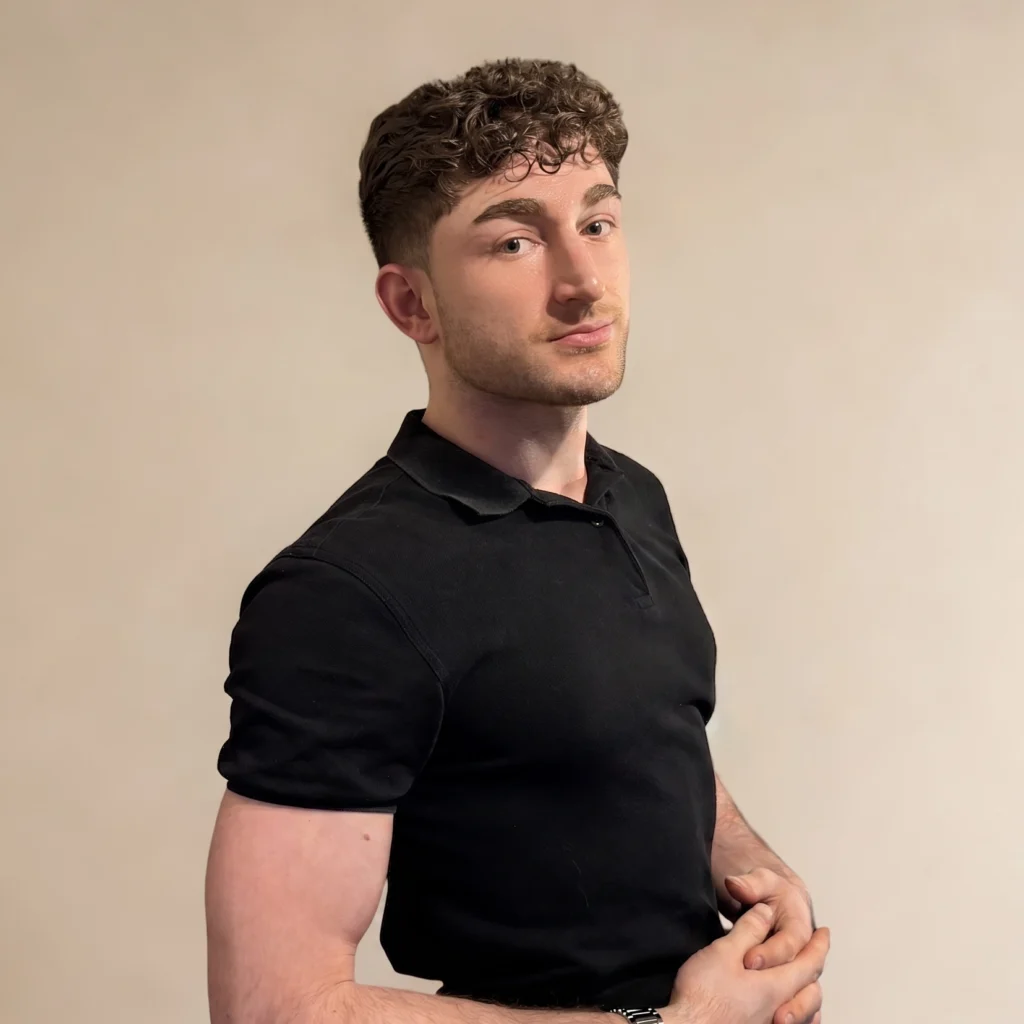
A biochemist working in the space between research and explanation.
I hold a First Class MBiochem from Cardiff University, with research grounded in TNF-family and apoptotic signalling in cancer models, and the biology of how tissues respond to pressure. The skin barrier is one expression of those principles, not the last.
I wrote The Damaged Skin Barrier because it was the book I was looking for when my own skin became reactive and unstable, and I could not find it. Every resource told me what to apply. None explained why things had changed.
Education
MBiochem · First Class · Cardiff
Research
European Cancer Stem Cell Research Institute
Interests
Epidermal biology · lipid biochemistry
Based
Cardiff, South Wales
Who built this
A biochemist working in the space between research and explanation.
I hold a First Class MBiochem from Cardiff University, with research grounded in TNF-family and apoptotic signalling in cancer models, and the biology of how tissues respond to pressure. The skin barrier is one expression of those principles, not the last.
I wrote The Damaged Skin Barrier because it was the book I was looking for when my own skin became reactive and unstable, and I could not find it. Every resource told me what to apply. None explained why things had changed.
“Symptoms matter, but on their own they explain very little. I became more interested in what the skin was trying to compensate for than in the labels being attached to it.”
Education
MBiochem · First Class · Cardiff
Research
European Cancer Stem Cell Research Institute
Interests
Epidermal biology · lipid biochemistry
Based
Cardiff, South Wales
Platform index
A working body of writing.
The platform is built around a growing archive of mechanism-first articles, a forthcoming book, and a fully cited reference framework. Here is where it currently stands.
/ 01
The Book
- In Production
/ 02
Articles
- Active
/ 03
References
- Live
/ 04
Clinics
- Summer 2026
/ 05
Next
- Forthcoming
My ethos